

In a recent article on Captive.com, spotlighting the CICA session, “Employee Benefits and Medical Stop-Loss: A Partnership between HR, Finance, Risk, and Markets,” our SVP, Prabal Lakhanpal explains the legal process of setting up a captive and results employers can expect. You can find the full article here.
The 2025 Captive Insurance Companies Association (CICA) Annual Conference brought together professionals from across the risk management industry to explore emerging trends and challenges. Held in Tucson, Arizona, this year’s event featured thought-provoking discussions on regulatory updates, emerging risks, and innovative solutions. Below are the key themes that shaped the agenda.
1. Regulatory and Tax Updates
Regulatory changes continue to be a significant concern for captive owners. With the new administration and shifting regulations, staying up to date is critical for ensuring compliance and mitigating risks. Notable compliance-focused sessions included:
– “IRS Audits – Now and the Future”: This session examined the evolving landscape of IRS audits and the impact on captive owners, providing insights into anticipated changes.
– “What’s New / What’s Hot / What’s Not – Tax News You Need”: Presenters explored the latest tax updates that affect captive insurance structures, with a special focus on M&A implications.
2. Emerging Risks: Climate Change and Sustainability
As the world grapples with climate-related challenges, captives are increasingly seen as vital tools for managing environmental risks. This year’s conference addressed how captives can integrate climate resilience into their risk management strategies. Some notable sessions include:
– “Advancing Climate Resilience: Integrating Parametric Insurance and Carbon Credits in Captive Programs”: Spring’s Chief P&C Actuary, Peter Johnson, alongside a representative from the State of Connecticut and CEO of Ryskex, discussed how captives are incorporating parametric insurance and carbon credits to address climate risks.
– “Intersection of Climate Risk and Captives”: This presentation examined the growing intersection of climate change and captive insurance, exploring how captives are playing a role in mitigating climate-related risks.
3. Innovative Technologies in Captives
Technological advancements are revolutionizing captives, enhancing risk management, claims handling, and overall operational efficiency. Technology continues to be a key driver for the future of the industry. Several sessions focused on innovative technology being used in the industry:
– “Future-Ready Risk Control: AI in the Captive Landscape”: This session explored the role of artificial intelligence in transforming risk control within captives, offering a glimpse into how AI will shape the future.
– “Optimizing Captive Management through Best Practices”: Speakers focused on utilizing technology and innovative practices to optimize captive operations. This session provided actionable insights for improving efficiency.
4. NextGen and Diversity in Captive Insurance
The future of the captive industry depends on cultivating a diverse and dynamic workforce. CICA’s commitment to engaging young professionals and promoting diversity was evident throughout the conference. Here are some presentations I thought best highlighted the importance of prioritizing diversity and ensuring the long-term success of the industry.
– “Diversify Your Team, Multiply Your Innovation”: This session highlighted the importance of diversity in driving innovation within captive programs and provided strategies for building inclusive teams.
– “Amplify Women and NEXTGen Networking Luncheon”: A key networking event designed to connect young professionals with industry leaders, providing mentorship and career development opportunities.
As always, the CICA Annual Conference provided a valuable platform for networking, learning, and sharing ideas within the captive insurance community. It was a privilege to engage with so many passionate professionals dedicated to driving innovation and shaping the future of captives. From navigating regulatory complexities and embracing new technologies to addressing emerging risks and fostering diversity, this year’s discussions showcased the dynamic nature of the captive landscape.
As we look ahead, we remain committed to staying at the forefront of these evolving trends and delivering forward-thinking solutions to our clients. We look forward to continuing these conversations and seeing what next year’s CICA conference will bring.
The past year has seen a surge in class action lawsuits against some of the largest employers in the country, alleging that fiduciaries are breaching their duties in deciding how to allocate forfeitures. While these claims are not necessarily valid, it may be prudent to take a moment during your next benefits committee meeting to review what your plan document requires, assess what your plan is currently doing, and determine whether any changes are necessary.
Before this recent litigation, the issue of forfeitures appeared to be well settled. Participants in a 401(k) or similar defined contribution plan are always fully vested in their own contributions. However, many plans impose a vesting period before participants become fully vested in employer contributions (such as matching contributions). If a participant leaves the company before completing the vesting period, the employer contributions are forfeited. According to the IRS, these forfeited amounts can be used by the plan sponsor to offset plan expenses or reduce employer contributions. Consequently, many plan documents allow both uses of forfeitures and leave the decision to plan fiduciaries.
In these class action lawsuits, plaintiffs allege that using forfeitures to reduce employer contributions, though permitted by the IRS under the Tax Code, violates ERISA’s fiduciary duties, which are administered by the Department of Labor (DOL). Plaintiffs argue that forfeitures are plan assets and, as such, may only be used to pay benefits or the reasonable expenses of the plan. They further contend that ERISA’s duty of loyalty requires fiduciaries to prioritize participants’ interests over those of the plan sponsor. Specifically, the lawsuits claim that using forfeitures to reduce employer contributions rather than to offset participant-borne plan expenses constitutes a fiduciary breach.
It is important to note that these cases are in their early stages, that the legal theories involved are novel, and that the DOL has never taken the position that using forfeitures to reduce employer contributions is a fiduciary breach. Nevertheless, given the current controversy, plan fiduciaries may benefit from reassessing their approach to forfeitures by addressing three key questions.
1. What does your current plan document provide?
Plan documents often take different approaches to forfeitures. Some mandate a single use, while others specify an order of priority for different uses or allow multiple uses at the fiduciaries’ discretion. Fiduciaries should be familiar with the requirements of their specific plan document.
2. What is your plan actually doing?
Fiduciaries are obligated to follow the terms of the plan document. For example, if the document requires forfeitures to be used to offset plan expenses, using them to reduce employer contributions would constitute a breach of duty, and vice versa. Unlike the recent lawsuits, the duty to adhere to plan terms is a well-established legal principle that the DOL has enforced in the past. Fiduciaries should ensure their practices align with their plan document and consult legal counsel if any discrepancies are identified.
3. Does your current plan language reflect your intentions?
In light of recent litigation, it is worth considering whether the current plan language aligns with your goals. Do you want fiduciaries to have discretion, or should the plan document provide clear direction? For instance, if the plan document specifies that forfeitures will be used to reduce employer contributions, fiduciaries must follow that directive unless it is determined to be unlawful. Clear guidance in the plan document may shift the decision from a fiduciary responsibility to a “settlor” decision by the plan sponsor, reducing fiduciary discretion and potential liability.
There are several approaches to handling forfeitures, and fiduciaries should consult with legal counsel to evaluate the specifics of their plan and circumstances. However, taking the time to review your plan’s current practices is a straightforward and valuable step and a sensible addition to your 2025 fiduciary checklist.
As healthcare costs continue to rise, employers are exploring innovative strategies to manage expenses while maintaining quality coverage. One increasingly popular option is joining an insurance consortium or coalition—a group of organizations that collaborate to provide insurance coverage. For employers considering self-insuring medical costs, consortiums offer several compelling advantages:
Alternative Funding Opportunities
Coalitions enable organizations to explore cost-effective funding models, such as self-insurance or utilizing a captive. By pooling resources, members share costs and risks across a larger base, reducing financial volatility while creating potential savings.
Group Purchasing Power
Collaborating within a consortium enhances buying power. Members can secure volume discounts and negotiate better contract terms with key vendors, including medical third-party administrators (TPAs), pharmacy benefit managers (PBMs), stop-loss carriers, and more. Additionally, consortiums often extend group benefits to services like point solutions, data warehousing, and wellness programs, maximizing value for all participants.
Claims Savings
Self-funding claims through a TPA allows employers to avoid high insurer premiums and directly manage healthcare costs. This approach can lead to significant savings, particularly when combined with a coalition’s shared resources.
Data
Consortium structures typically provide regular access to claims data, offering employers greater transparency and control. With actionable insights into trends and spending, organizations can make informed decisions and proactively address cost drivers throughout the year.
Engage with Like-Minded Organizations
While a variety of collaboratives exist, many are designed to bring together organizations of a similar nature, whether based on the type of organization, geography, size, or the nature of the business. These organizations not only pool risk but also collaborate, enabling members to exchange ideas, benchmark performance, establish common plan designs, and access shared administrative services. These collective efforts create a stronger foundation for sustainable healthcare strategies. One successful example is our client edRISK, which includes edHEALTH. We’ve worked with edHEALTH since the beginning and today it’s an 11-year-old member-owned group of educational institutions that are saving money on their employee health insurance costs and uncovering new opportunities to improve health and value for their faculty and staff.
Is a Collaborative Right for Your Organization?
While joining a consortium may seem like a significant step, the potential benefits often outweigh the effort required. From cost savings and risk mitigation to enhanced data transparency and collaboration, collaboratives are a powerful tool for employers seeking sustainable healthcare solutions. To learn more about how consortiums can benefit your organization, please reach out to us.
High interest rates have been an unwelcome storm for many parts of the economy, but defined benefit pension Plan Sponsors have rejoiced at the end of the long drought of historically low interest rates. The sharp rise in interest rates—and the accompanying reduction in plan funding liabilities—has led to a wave of plan terminations, annuitizations, and pension risk transfers. A key feature of this recent activity was the prioritization of innovative alternatives to traditional termination strategies, which fully protect plan participants while reducing annuitization and termination costs.
Captive Reinsurance and Defined Benefit Plans
One innovative solution is to use a Plan Sponsor’s captive insurance company to reinsure the risks of the issuing insurer’s annuity contract. This contract funds the defined benefit plan while it remains active and provides annuities to participants if the plan is later terminated. By partnering with a fronting insurer, the captive assumes the primary underwriting risk, significantly reducing the cost of the annuity. Depending on the structure of the program, this arrangement may require the approval of the U.S. Department of Labor (DOL) through the grant of an individual prohibited transaction exemption. In July, the DOL tentatively authorized the first such arrangement and submitted it for public comment. Tentative authorization allows the Plan Sponsor to proceed with the transaction, after which final authorization would be issued.
The DOL proposed the individual exemption in response to an application from the Memorial Sloan Kettering Cancer Center (MSK). MSK sponsors a well-funded, frozen defined benefit pension plan with obligations of roughly $1.5 billion. This approach results in plan savings of approximately 10% compared to traditional plan annuitization.
Primary Benefits Test and Other Exemption Conditions
As with any individual exception, the DOL requires that a program meet certain conditions. The most significant is the “Primary Benefits Test,” which requires the majority of the economic benefit from the transaction to accrue to the plan participants and beneficiaries. In the MSK proposed exemption, just over half of the savings under the reinsurance arrangement will be directed to participants in the form of a one-time, universal benefit increase, resulting in a material increase of as much as 5% for participants in the frozen plan. This benefit increase would not be achievable using a traditional annuity solution.
The proposed exemption also requires ongoing oversight and approval by an independent fiduciary authorized to act on behalf of the plan, and regular reporting to DOL and state insurance regulators, both of whom will provide continuous oversight.
New Take on a Proven Process
While the use of a captive to reinsure third-party insurance company risk for ERISA-covered employee benefits is not new— the DOL has granted dozens of individual exemptions in connection with death, disability, and AD&D benefits in the past 25 years—this is the first time proposing such a tactic for a defined benefit pension plan annuity.
An individual exemption is necessary because the third-party annuity issuer is engaged by the plan with the understanding that it will reinsure its risk with the Plan Sponsor’s wholly-owned captive insurer, an arrangement that involves fiduciaries approving party-in-interest transactions prohibited by ERISA Sec. 406(a) and 406(b). To propose the exemption, the DOL used its authority under ERISA Sec. 408(a) to grant administrative exemptions where the DOL finds doing so to be in the best interest of participants, protects their benefits, and is administratively feasible.
Captive reinsurance is an increasingly important part of the employee benefits landscape for large Plan Sponsors, offering better control of costs; more timely and accurate claims data; and more efficient plan administration.
This is a welcome development for Plan Sponsors who have been looking for alternative avenues that allow them to provide more benefits to their plan participants while lowering the total cost of the transaction. This structure, widely used in European markets, could potentially create a new avenue for plan terminations in the U.S. market.
In a recent article from Captive.com, our SVP, Prabal Lakhanpal explains how rising healthcare costs can be mitigated through captive insurance and medical stop-loss. You can find the full article here.
In a recent article from Captive.com, our SVP, Prabal Lakhanpal explains how captive insurance can be a viable solution for employers to combat the current hard market. Check out the full article here.
Our Senior Vice President, Prabal Lakhanpal, was quoted in an article from Captive.com spotlighting how private equity firms can utilize captive insurance to lower the costs of risk. You can find the full article here.
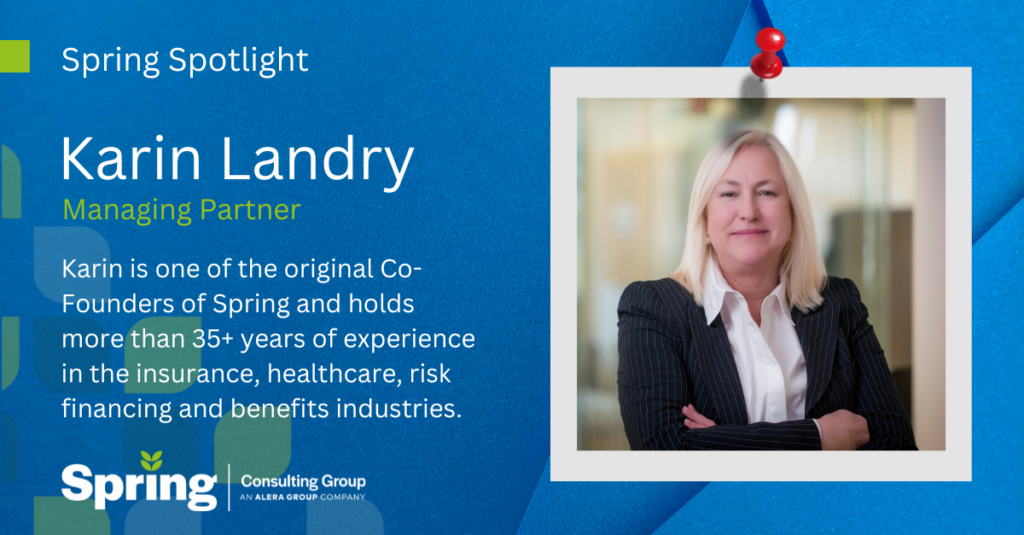
Title:
Managing Partner
When Did You Start Spring?:
In 2004, I co-founded Spring with Karen English, Steven Keshner, John Cassell, and Teri Weber as part of a management buy-out from Watson Wyatt. I thought we could all bring unique skills that would deliver for clients.
Where Are You From?:
I’m from Burlington, MA, and I’ve lived in Massachusetts most of my life. Although now I also spend time in Rhode Island and New Hampshire.
At Work Responsibilities:
I lead the team, drive thought leadership and business development, and contribute to some of our largest consulting engagements. My role also involves shaping our firm’s strategy and fostering client relationships.
Outside Of Work Hobbies/Interests:
I enjoy traveling, playing tennis, spending time with the family and following Formula 1.
Fun Fact:
I majored in both finance and film because I was passionate about becoming a movie director. You never know where your career path will take you!
Describe Spring In A Few Words:
Awesome people doing great work!
Favorite Movie:
The Seventh Seal by Ingmar Bergman.
Pets:
2 Pets named Shadow and Tygger . Shadow is a sweet, large black labrador retriever who loves to play! Tygger is a cat (whose coloring resembles Tigger from Winnie the Pooh).
Do You Have Any Children?:
I have 2 incredible daughters: Emily (46) and Stephanie (36)
Favorite Food:
I enjoy a bit of everything, especially love variety—Thai food comes to mind first!
Favorite Place Visited:
Stockholm during the winter.
If You Were A Superhero Who Would You Be?:
Wonder Woman.
Favorite Book:
Black Bird Oracle Book by Deborah Harkness.
Name One Thing On Your Bucket List:
To visit Jerusalem.
What Is One Of Your Proudest Moments?:
Seeing my daughter graduate and get married.
If You Won The Lottery, What Is The First Thing You Would Do?:
I would donate back to the community. Rosie’s Place is a specific philanthropy I’ve been involved with and they do wonderful work on behalf of women in the Boston communities. I’d use the winnings to help those less fortunate, to help lift them up.
What Are You Passionate About?:
Delivering excellent results for clients, building long-lasting relationships, and working with the incredible team we have at Spring!